AI Pendants That Remember Everything: India Reality Check
Aditya Kachhawa

Someone mentions a client name in your meeting. You recognize it but can't place the context. Three seconds later, your AI pendant vibrates. You glance at your phone the device searched months of conversations and surfaced everything: this client prefers morning calls, hates small talk, leads a materials science team.
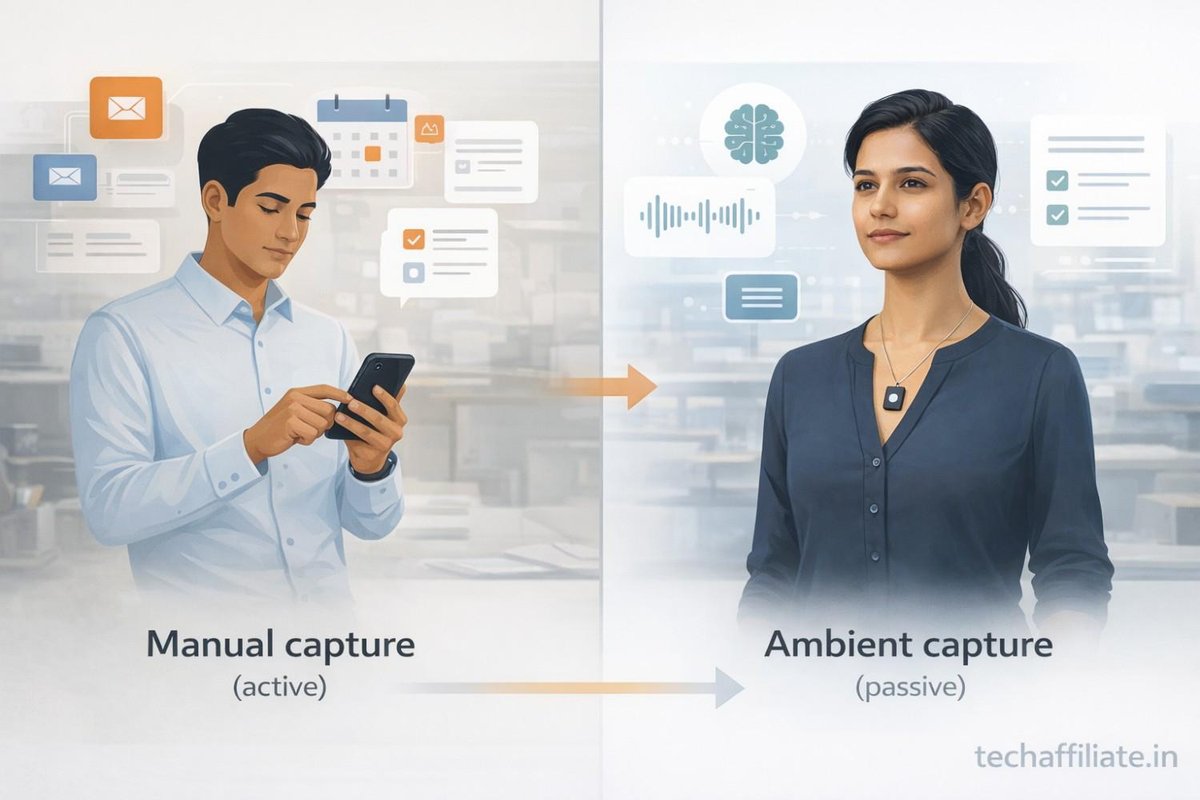
This is computing's next shift. For decades, we opened apps, took notes, set reminders. AI wearables invert this: they capture automatically, remember everything, answer on demand. "What did Priya say about the deadline?" The device searches weeks of audio instantly.
These small devices listen continuously and make your life searchable. In 2026, they're moving from experimental gadgets to practical tools.
The question for India: will they work with our languages, costs, and privacy concerns?
What AI Lifelogging Wearables Actually Are
AI wearables record audio or video continuously, process it through AI, and let you search your life like email.
The fundamental difference from phones:
| Smartphones | AI Wearables |
|---|---|
| You open apps | Always listening |
| You take notes | Captures automatically |
| You search apps | You search your life |
| Requires your attention | Works in background |
↔️ Scroll horizontally to see all columns
Think of them as always-on recorders with ChatGPT-level intelligence. The AI transcribes conversations, extracts action items, identifies key moments, and makes everything searchable without you managing it.
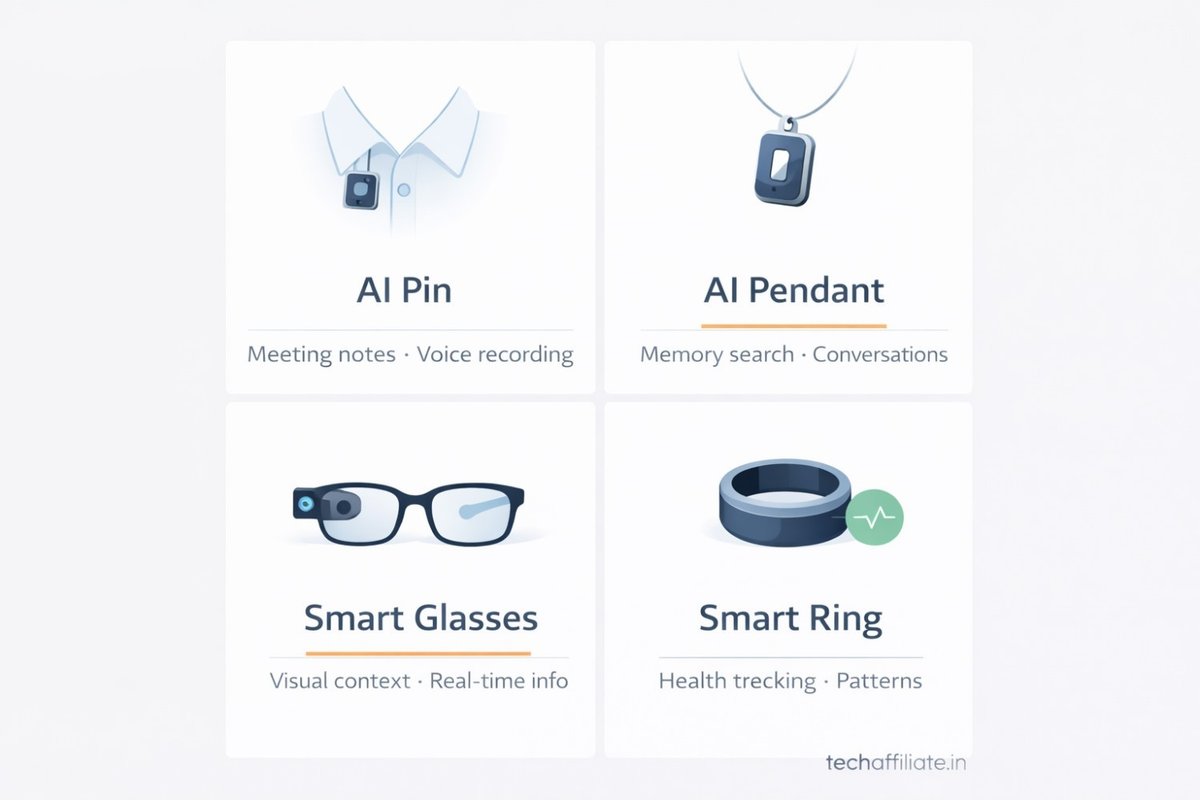
Four main types exist:
AI Pins clip to your shirt like a lapel badge. They record audio and some project information. The Humane AI Pin defined this category but struggled commercially.
Pendant Necklaces hang around your neck like jewelry. Plaud NotePin and Limitless Pendant focus on discreet recording subtle enough that people might not notice you're wearing tech.
Smart Glasses combine cameras and microphones in eyewear. Meta's Ray-Ban smart glasses let you ask questions about what you're seeing and get AI responses through bone-conduction audio.
Smart Rings like Oura track health but are adding AI coaching. They can't reliably record conversations (too far from your mouth) but excel at correlating behavior with health data over time.
Why 2026 Is the Moment
Three breakthroughs converged recently:
AI models got small and efficient. Companies compressed GPT-level intelligence into chips running on milliwatt power. Capable language models now fit in coin-sized devices.
Voice recognition became reliable in noise. Modern microphones isolate your voice from background chatter in coffee shops, offices, traffic contexts where older tech failed.
Privacy tools matured. On-device processing keeps conversations local. AI identifies sensitive information and redacts it before data leaves your device.
The real driver isn't technical, it's human desperation.
Consider: you probably can't remember what happened in your last three meetings without checking notes. Not because you weren't paying attention, but because humans can't remember everything while simultaneously participating, deciding, planning. We're doing two incompatible jobs at once.
Productivity tools haven't helped. Every new app Slack, Notion and Asana adds another place to check, another system to maintain. We manage tools instead of doing work.
AI wearables flip this model. The device captures and organizes automatically while you stay focused on thinking and deciding.
Real Use Cases That Work
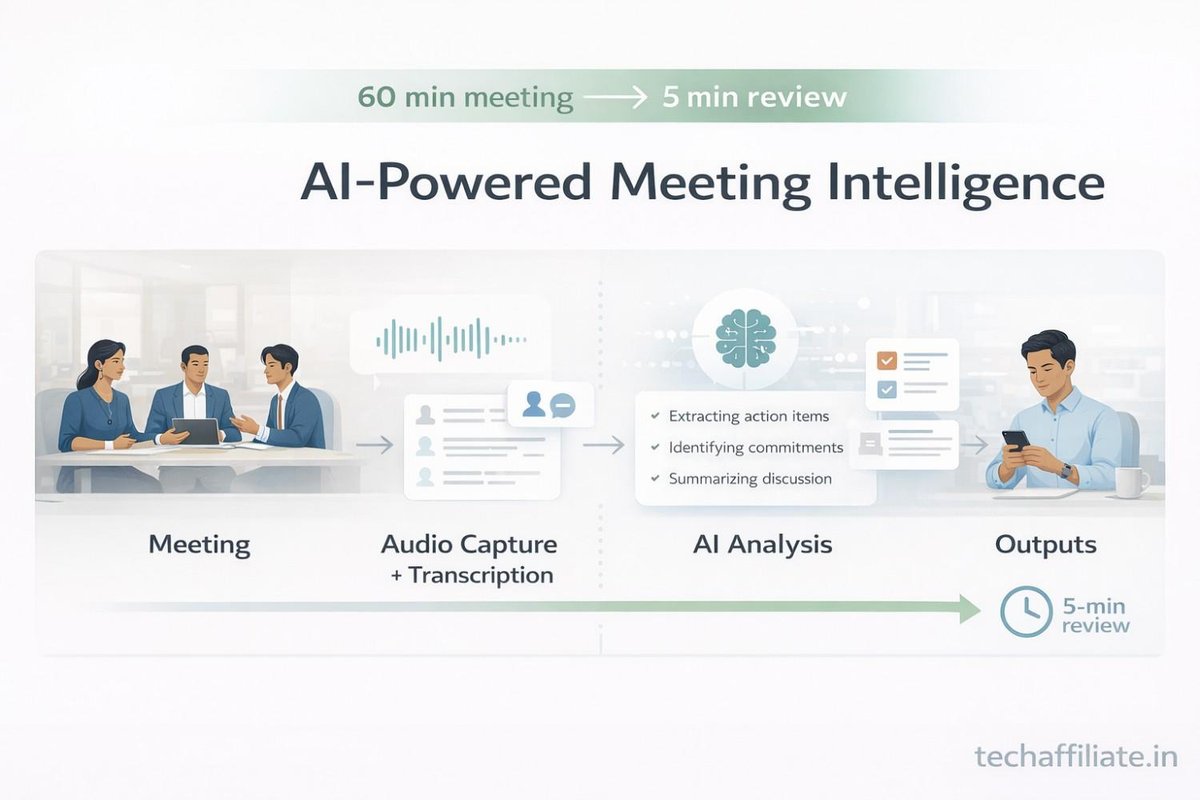
Meeting Intelligence: Your pendant records meetings automatically, transcribes them, identifies speakers, extracts commitments, generates summaries. A product manager running five meetings daily saves 45-60 minutes on notes. More critically, nothing slips through the AI catches when someone mentions a sprint-blocking issue.
Personal Memory Search: Your conversational history becomes searchable like email. "What restaurant did Arjun recommend?" The AI scans weeks of audio in seconds. Knowledge workers struggle constantly to remember who said what or when conversations happened. This solves it.
Automatic Commitment Tracking: The device identifies promises: "I'll send the proposal by Friday." It creates reminders and flags approaching deadlines. This catches informal commitments from Slack calls or hallway chats exactly what slips through task apps.
Learning Acceleration: Students capture lectures and generate personalized study materials. A medical resident records attending physician explanations during rounds, then the AI creates flashcards for spaced repetition. Learning accelerates because materials match exactly what you heard and struggled with.
Behavioral Patterns: Over time, the device notices patterns you miss. You're more productive in morning meetings. You use uncertain language when stressed. The AI alerts you to these patterns, providing external metacognition.
Where it breaks: The technology isn't perfect. When three people talk over each other, the AI might misattribute who said what. Technical jargon gets mangled "Kubernetes deployment" becomes "communities deployment." Sarcasm and humor get transcribed literally, missing actual meaning. The device gives you a searchable record, but verify critical details yourself.
The India Reality Check
Cost Reality
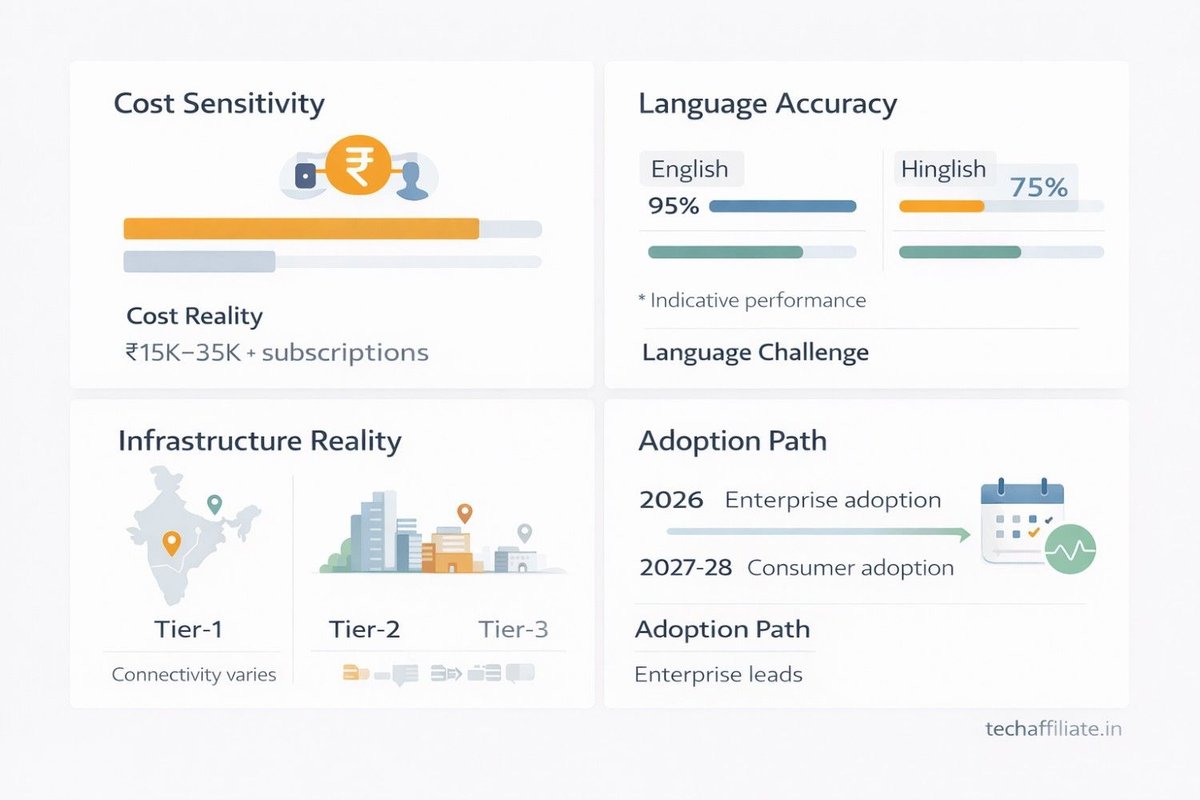
Most AI wearables cost ₹15,000-₹35,000 plus monthly subscriptions of ₹800-₹2,500. That's significant when quality smartphones cost similar amounts. For students and early-career professionals, pricing is prohibitive. Enterprise adoption will drive early growth, companies deploying devices like they provide laptops. A Bangalore IT services firm recently piloted AI pendants with 50 client-facing consultants, justifying the cost through reduced post-meeting admin time and improved client engagement tracking.
Language Reality
These devices train on English or Hindi separately. Indians code-switch constantly mixing Hinglish, throwing in regional phrases, using English grammar with Hindi words. Current AI struggles with this.
When someone says "Yaar, deadline ko stretch kar sakte hain kya because client ne requirements change kar diye," the AI might produce gibberish. Accuracy drops from 95% in pure English to 70-80% in real Indian conversations.
Accent diversity compounds this. AI trained on American English misunderstands Indian accents. It's improving, but not solved.
Infrastructure Reality
AI wearables assume reliable internet for cloud processing and stable electricity for daily charging. Urban India supports this. Tier-2 and tier-3 cities face challenges. Rural areas can't support cloud-dependent devices.
Battery charging seems trivial until you live with erratic power. Daily charging becomes impossible when electricity is uncertain.
Work Culture Reality
We're comfortable with closer boundaries than Western cultures—sharing phones, collaborative decisions. This might make conversation recording less shocking.
But the flip side: recording conversations with your boss or elder family members might seem disrespectful. Social hierarchy influences whether you can wear an obvious recording device in meetings with senior stakeholders.
Privacy, Trust, and Legal Reality
Here's the uncomfortable truth: wearing an AI wearable means recording people without explicit consent, even when the device is visible.
There's a crucial distinction: recording a conversation feels temporary. Having an AI generate searchable summaries that surface specific quotes from six months ago feels like permanent surveillance. This psychological difference matters more than most technical discussions acknowledge.
India's legal landscape is evolving. The Digital Personal Data Protection Act 2023 establishes consent requirements, but implementation remains unclear for continuous recording. Recording conversations where you're a participant is generally legal, but sharing recordings without permission is murky territory.
Social norms matter more than regulations right now.
Recording devices change conversations. People self-censor subconsciously. Trust erodes when casual remarks become searchable. Professional relationships suffer if colleagues feel surveilled rather than collaborated with.
Some organizations already ban recording devices. Coworking spaces, corporate offices, and healthcare facilities are implementing explicit prohibitions.
The privacy technology has improved on-device processing, encryption, automatic redaction. But technical privacy doesn't solve social trust. The best encryption doesn't help if your team is uncomfortable around your pendant.
For India specifically, data localization matters. Devices processing data on international servers face scrutiny under DPDP Act provisions. Prefer devices that process locally or store data on India-based servers.
The reality: widespread adoption requires social acceptance, not just technical capability. Until AI wearables become as unremarkable as Bluetooth earbuds, they'll face resistance.
Practical Buyer Checklist
If you're considering an AI wearable, evaluate these factors:
Privacy Controls
- Can you review and delete recordings easily?
- Does it process on-device or send audio to cloud?
- Where are servers located? (India data localization matters)
- Can you export your data if you stop using it?
Battery Reality
- Get real user reports, not marketing claims
- "All-day battery" often means 8 hours, not 16
- Can you quickly charge mid-day?
Accuracy for Your Context
- Test with your actual accent and language mixing
- Check performance in noisy environments
- Can it handle multi-speaker Indian conversations?
Cost Structure
- Calculate total cost over 2 years (device + subscriptions)
- Expensive devices with low subscriptions are often cheaper long-term
- Avoid devices where basic features require perpetual payment
Integration
- Does it connect to your calendar, email, notes?
- Can you export transcripts to existing tools?
- Standalone devices are useless
Social Comfort
- Can you remove it easily when needed?
- Does it scream "I'm recording"?
- Will it damage relationships or limit where you go?
Company Stability
- Choose devices from companies with clear business models
- Startups will fail avoid devices that might be abandoned
What Will Succeed and Fail
Winners (2026-2028):
Enterprise-focused pendants will dominate. Companies deploying AI wearables to knowledge workers will drive adoption, just as they did with laptops. The ROI is clear and measurable.
Privacy-first platforms will capture security-conscious users. Devices with auditable on-device processing will win enterprise customers with compliance requirements.
Specialist smart glasses will succeed in specific industries: healthcare, field service, logistics, manufacturing. These contexts justify cost through efficiency gains.
Failures:
AI companion devices marketed as friends will fail. The use case is too narrow.
Smartphone replacement devices will fail. People aren't giving up phones. Successful wearables augment phones, not replace them.
Ultra-cheap devices (under ₹4,000) will deliver poor experiences, damaging the category's reputation.
Pure transcription devices without meaningful AI will be outcompeted by smartphone apps.
The trajectory: By 2028, AI wearables will be common in professional settings but not ubiquitous. Think wireless earbuds around 2018—increasingly visible, no longer shocking, but not yet universal.
The Balanced View
AI wearables in 2026 aren't revolutionary. They're evolutionary a logical next step in handling information overload.
They solve real problems for professionals drowning in meetings. They enable capabilities genuinely impossible with smartphones. But they're not ready for mainstream Indian adoption. Language challenges are real, social friction persists, costs remain high.
Be honest about your needs. Consultants who live in meetings will see immediate value. Students hoping for magical study shortcuts will be disappointed. Enterprise knowledge workers will benefit if companies handle deployment thoughtfully. General consumers should wait the technology will improve and get cheaper.
For Indian professionals in continuous conversations—researchers, managers, sales teams, consultants the ROI is becoming clear. For everyone else, 2027-2028 makes more sense. Let others work through the rough edges.
Here's what matters: we're watching early-stage ambient intelligence computing that works alongside us rather than demanding attention. AI wearables are the first visible form. Devices will improve. Accuracy will increase. Prices will drop.
But the fundamental tension remains: technology that augments your memory can erode trust with people around you. The device that makes you productive can make others uncomfortable. The tool that helps you remember everything might make you forget how to forget.
Navigate accordingly. Buy for concrete problems, not future promises. Value human relationships over perfect information capture. Remember that the best technology is the kind you can choose not to use.
Frequently Asked Questions
What are AI lifelogging wearables?
AI wearables are small devices that record audio or video continuously, process it through AI, and let you search your life like email. They capture automatically, remember everything, and answer on demand without requiring you to manage recordings.
How much do AI wearables cost in India?
Most AI wearables cost ₹15,000-₹35,000 plus monthly subscriptions of ₹800-₹2,500. This pricing is prohibitive for students and early-career professionals. Enterprise adoption is driving early growth, with companies deploying devices to knowledge workers.
Do AI wearables work with Hinglish and Indian accents?
AI wearables struggle with code-switching. Accuracy drops from 95% in pure English to 70-80% in realistic Indian conversations. Most devices train on English or Hindi separately, not how Indians actually speak. Accent diversity compounds this challenge.
Are AI wearables legal in India?
The legal landscape is evolving. The DPDP Act 2023 establishes consent requirements, but implementation remains unclear. Recording conversations where you're a participant is generally legal, but sharing without permission is murky territory. Social norms matter more than regulations currently.
Which AI wearable should I buy in 2026?
It depends on your use case. Consultants and managers in frequent meetings will see immediate ROI. Students expecting magical shortcuts will be disappointed. Consider: pendants (Plaud NotePin, Limitless) for discreet recording, smart glasses (Meta Ray-Ban) for visual context, or smart rings (Oura) for health tracking. Evaluate privacy, battery life, language accuracy, and 2-year total cost.
What are the main problems with AI wearables?
Key limitations: language accuracy (struggles with Hinglish), battery life (8-12 hours, not full days), social discomfort (people feel surveilled), transcription errors (jargon mangled, sarcasm missed), high costs (₹15k-35k plus subscriptions), and privacy concerns (recording without consent damages trust).
Will AI wearables work in tier-2 and tier-3 Indian cities?
Infrastructure challenges exist. AI wearables need reliable internet and stable electricity. Urban India supports this. Tier-2 and tier-3 cities face challenges. Rural areas can't support cloud-dependent devices. Battery charging becomes problematic with erratic power.
Should students buy AI wearables for studying?
Wait until 2027-2028. While AI wearables can capture lectures and generate study materials, the cost (₹15k-35k) is prohibitive for most students. Language accuracy issues with code-switching professors will frustrate learning. The technology will improve and prices will drop.
Want more in-depth tech analysis like this? Subscribe to our newsletter at techaffiliate.in for weekly insights on emerging technology, honest product reviews, and India-focused tech trends delivered straight to your inbox.
Affiliate Disclosure
TechAffiliate may earn a commission if you purchase through our links. This helps support our work but does not influence our reviews. We provide our honest assessments of products. See my testing methodology →
Related Articles
 Cybersecurity
Jan 7, 2026 • 17 min read
Why Your Encrypted Data Is Already at Risk (And What's Being Done About It)
Hackers are stealing encrypted data NOW to decrypt with quantum computers in the 2030s. Learn how Post-Quantum Cryptography protects your data today.
 AI & Machine Learning
Dec 30, 2025 • 16 min read
DeepSeek vs ChatGPT vs Gemini 2026: Which AI is Better? (Tested 30 Days)
Gemini topped India's AI searches in 2025. I tested GPT-5.2, Gemini 3 Flash, and DeepSeek V3.2 for 30 days. Real results, privacy warnings, honest winner.
 AI & Machine Learning
Jan 4, 2026 • 19 min read
Zero Code? Indians Making ₹80K/Month With AI "Vibe Coding"
1.8 million developers worldwide pay for AI to write code. Indians earning ₹80K/month with vibe coding zero traditional programming needed. Complete 2026 guide inside.
 AI & Machine Learning
Dec 11, 2025 • 10 min read
What is Agentic AI? The Technology Replacing Apps in 2026 - Complete India Guide
Agentic AI isn't ChatGPT 2.0... it's something far more powerful. Discover how AI agents are replacing traditional apps in 2026, and why 200,000+ Indian IT professionals are already using this technology at TCS, Infosys, Wipro, and Cognizant. Complete guide for students and professionals.
Comments (0)
Leave a Comment
No comments yet
Be the first to share your thoughts!