Google's Universal Commerce Protocol: Why Affiliate Marketing Will Die in 2026 ?
Aditya Kachhawa

Imagine asking your AI assistant to buy you a laptop. Not to show options or compare prices, to buy one. Within seconds, it queries dozens of retailers, applies your preferences, checks delivery timelines, applies forgotten discounts, and completes the purchase. You never open a product page, read reviews, or click a link.
At the National Retail Federation's Big Show in January 2026, Google introduced the Universal Commerce Protocol (UCP) a standardized system allowing AI agents to transact directly with merchant infrastructure. Walmart, Target, Shopify, Etsy, Visa, Mastercard, and Stripe are already involved.
If you're an affiliate marketer: Your commission model has 12-24 months before it stops working as it does today.
If you're a developer: There's a window to build infrastructure bridging legacy e-commerce and AI-first commerce.
If you're running an e-commerce business: Your website may become irrelevant to the actual buying process.
Why Online Shopping Is Moving Away From Websites
Traditional e-commerce is designed around human hesitation. Product pages explain. Reviews reassure. Checkout flows reduce doubt.
AI agents operate on structured inputs: price, availability, reliability, delivery guarantees, and historical preference data. When those inputs are available programmatically, the website becomes unnecessary.
The Universal Commerce Protocol standardizes how merchants expose their data. Instead of optimizing storefronts for attention, retailers expose clean, machine-readable endpoints that AI systems query directly.
For non-technical readers: Websites were built for humans to read. UCP creates a parallel system built for machines to transact.
For technical readers: UCP standardizes merchant APIs around product catalogs (SKU, pricing, inventory), checkout endpoints (cart management, payment), and fulfillment data (shipping, returns). AI agents authenticate via OAuth, query via REST, and receive JSON responses with structured product metadata.
Websites become backends that feed data to AI systems making purchase decisions.
How AI-Driven Purchasing Works: A Complete Example
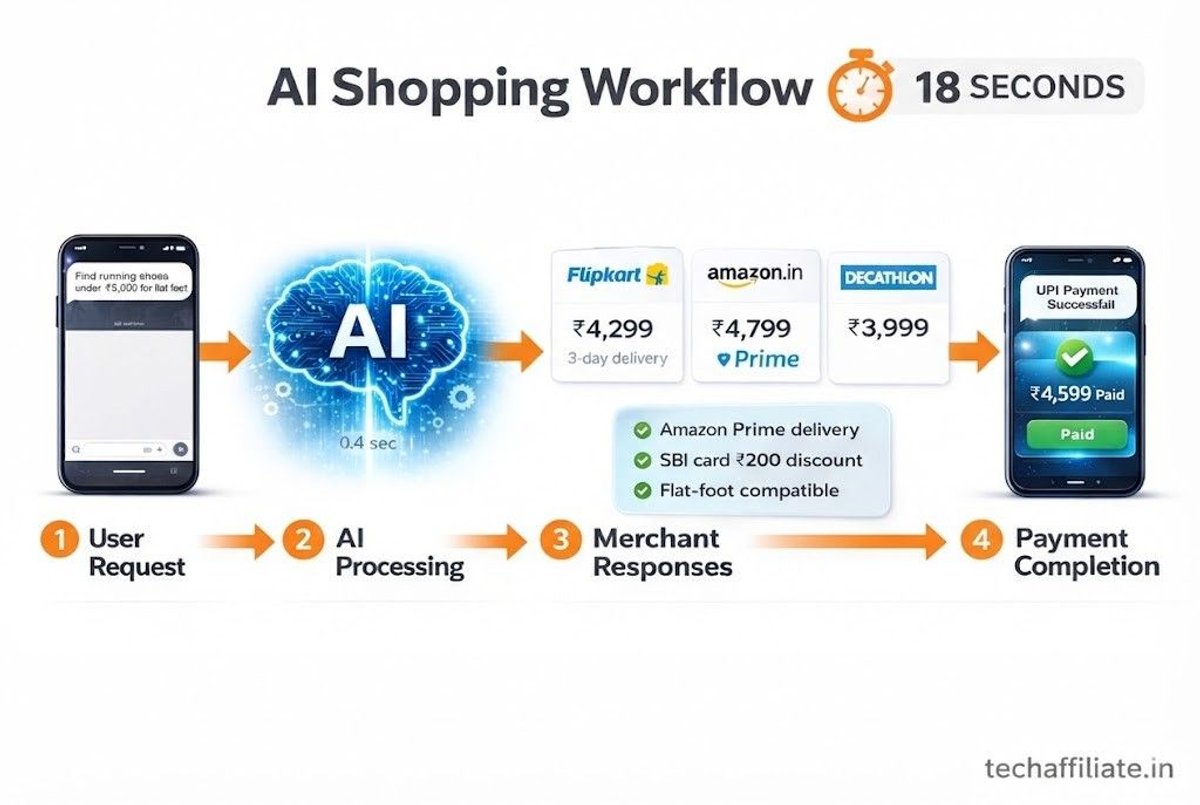
User request: A person in Jaipur asks in Hindi: "मुझे ₹5,000 के अंदर फ्लैट फीट के लिए रनिंग शूज़ चाहिए" (I need running shoes for flat feet under ₹5,000).
Query Construction:
The AI translates this into: running shoes, ₹5,000 ceiling, arch support for flat feet, location Jaipur.
Merchant Queries:
Flipkart: Nike Revolution 7 (₹4,299), 3-day delivery, flat-foot compatible
Amazon India: ASICS Gel-Contend 8 (₹4,799), Prime same-day delivery, arch support
Decathlon: Kalenji Run Support (₹3,999), 5-day delivery, flat-foot specific
Decision Logic:
The AI checks: Has Amazon Prime, previously bought ASICS (positive experience), SBI card offers ₹200 discount, needs shoes by Friday.
Recommendation:
"ASICS Gel-Contend 8 from Amazon India at ₹4,599 after discount. Arrives today, has arch support, matches your previous ASICS experience. Complete purchase?"
Execution:
User approves. AI completes checkout via saved UPI, applies bank offer, confirms delivery.
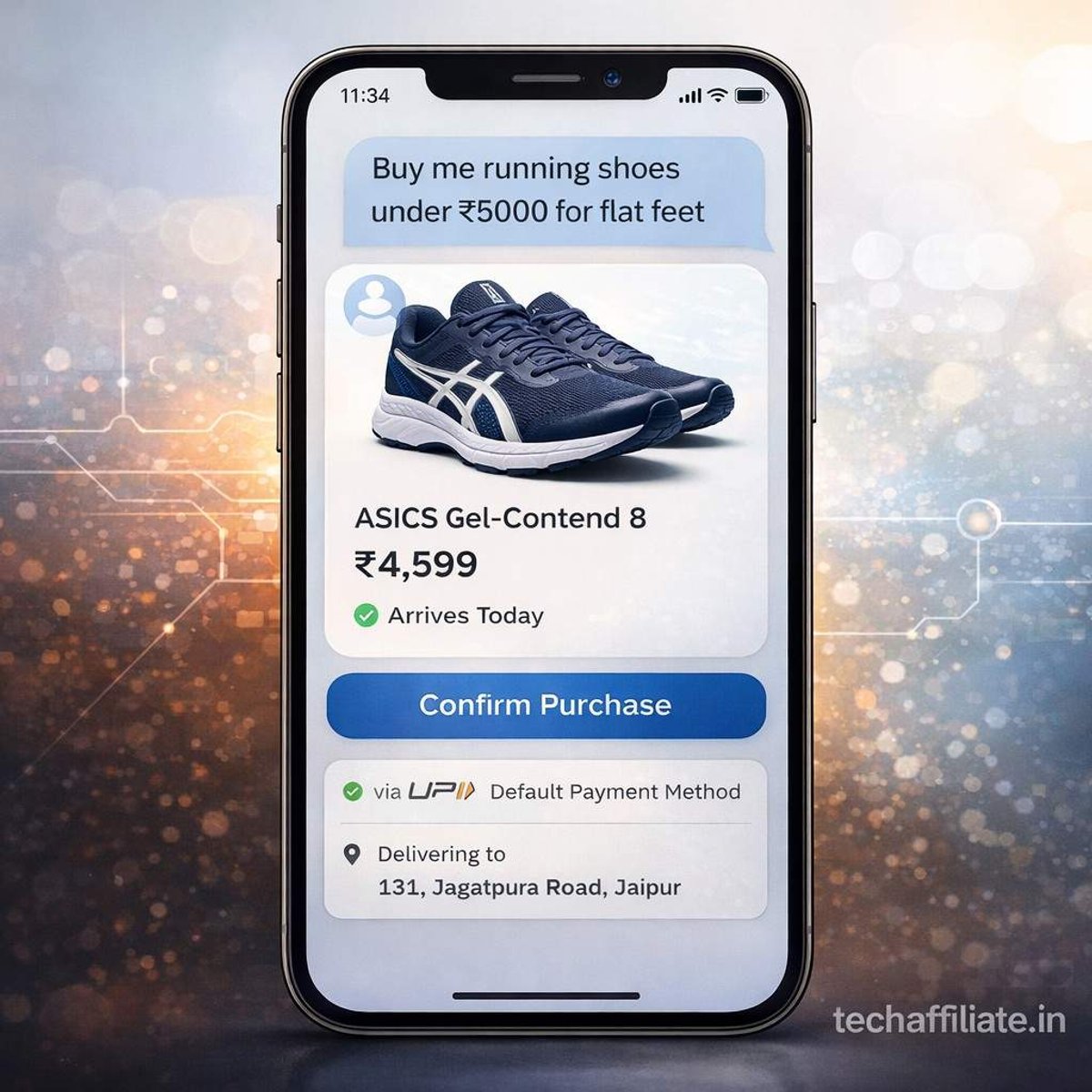
Total time: 18 seconds. Websites visited: Zero. Affiliate links clicked: None.
Why This Breaks the Affiliate Model
Affiliate marketing works because humans browse inefficiently. Affiliates reduce search costs and earn commissions by intercepting the buying journey with trackable links.
When a purchase happens inside an AI interface, there is no click, browser session, cookie, or attribution trail. Even if the AI absorbed insights from an affiliate's review weeks earlier, the transaction happens through an API call with no awareness of that influence.
The harsh reality: Influence without traceability does not get paid under current systems.
UCP's specification makes no attempt to solve affiliate attribution. The system is designed for machine-to-machine efficiency, not human referral economics.
What dies first: Price comparison, deal aggregation, and coupon codes exactly what AI agents perform better and faster.
What might survive: Deep expertise, hands-on testing, nuanced judgment for complex purchases where AI lacks real-world experience.
The attribution gap:
- Browser cookies (AI agents don't have browsers)
- URL parameters (API calls don't use URLs)
- Tracking pixels (no page loads in AI transactions)

Some networks are experimenting with AI-compatible tracking APIs. But who deserves the commission? The last person who wrote about the product? The AI platform? The merchant who provided the cleanest data?
At stake globally: $17+ billion in annual affiliate commissions, with India representing ₹15,000 crore.
Where AI-First Commerce Struggles Today
Trust becomes a barrier at higher price points. People delegate routine purchases groceries, accessories, replacements. But they hesitate with expensive or emotional items. A ₹300 phone case is transactional. A ₹1.5 lakh laptop is not.
Regulatory frameworks aren't ready. Consumer protection laws assume human decision-making. Liability questions will take 3-5 years to resolve.
Emotional purchasing resists automation. Buying gifts or luxury goods involves factors AI can't easily model knowing someone's taste, emotional context, symbolic meaning.
Why these friction points slow but don't stop AI commerce:
The economics are compelling: lower transaction costs, reduced cart abandonment, better price discovery, personalization at scale.
Adoption timeline: Routine purchases move to AI within 2-3 years. High-consideration purchases take 5-10 years. But routine purchases represent 60-70% of e-commerce volume.
Who Gains Power as AI Enters the Checkout
AI platforms control the recommendation layer. Google, OpenAI, Anthropic determine which merchants get queried, how results rank, and which products are recommended.
Payment networks gain structural advantage. Visa, Mastercard, Stripe, and UPI become critical as trusted rails for autonomous transactions.

Merchants with clean data infrastructure win. AI systems prefer consistency over persuasion. Retailers providing accurate, real-time inventory data and honoring commitments get favored.
What becomes scarce shifts from attention to trust. In AI-driven commerce, getting the AI to recommend you is everything.
Affiliates and creators lose leverage unless they transform. The valuable intermediaries are whoever controls information AI systems depend on: authoritative product databases, original testing data, expert frameworks.
Why India May Adopt This Faster Than Expected
Price sensitivity is extreme. Indian consumers routinely compare prices across platforms. AI agents that automate this and guarantee the lowest price will find immediate adoption.
Mobile-first infrastructure is ready. Indians are already comfortable with app-based shopping, WhatsApp commerce, and chat-based service. The leap to AI shopping agents is smaller than in desktop-browsing markets.
Payment infrastructure is frictionless. UPI proved Indians adopt new payment systems if they're faster and cheaper.
Language accessibility expands the market. AI assistants in Hindi, Tamil, Bengali unlock Tier 2 and Tier 3 cities that English-dominant platforms struggle to serve.
The risk for Indian affiliates is severe. Margins are already thin 2-4% compared to 10-15% in Western markets. AI price optimization will compress these further.
The opportunity lies in trust and language. High-quality buying frameworks in regional languages remain scarce. Electronics, appliances, education purchases categories needing genuine expertise offer defensible positions. The window is 18-36 months.
Concrete scenario:
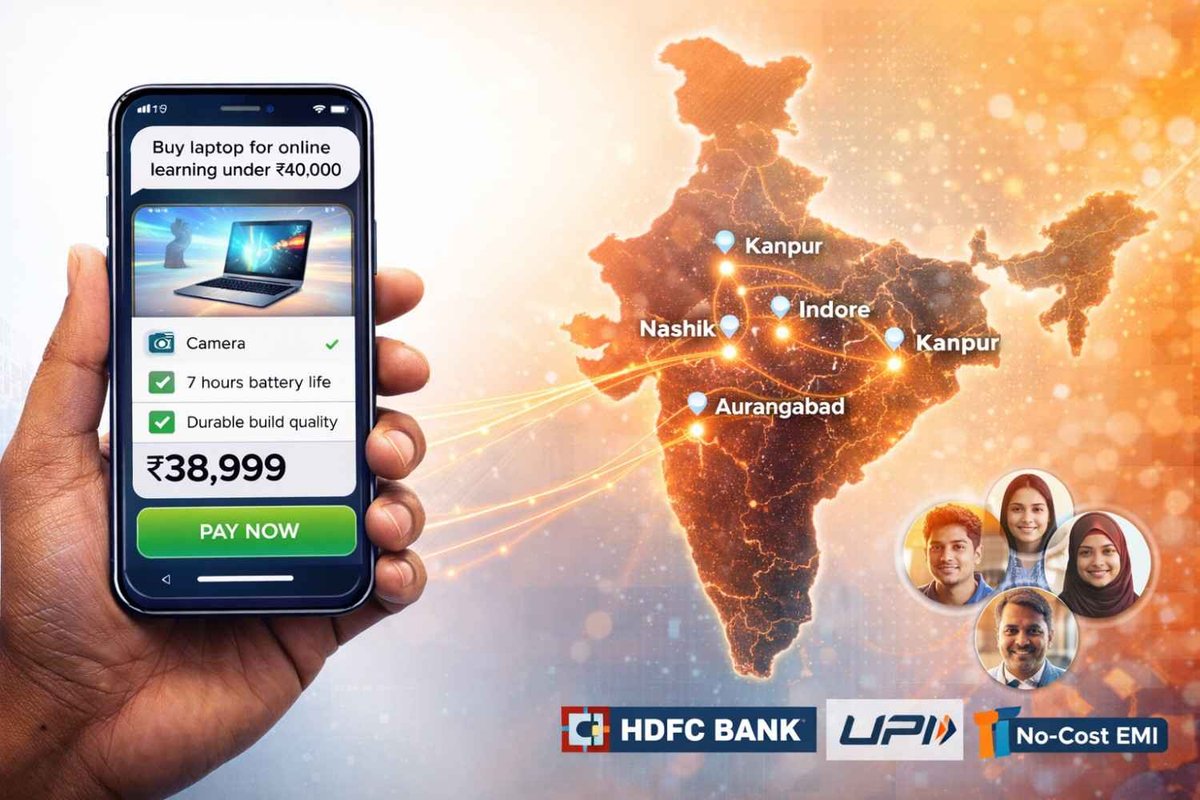
A Pune user asks in Marathi: "मला माझ्या मुलासाठी ऑनलाइन शिकण्यासाठी लॅपटॉप हवा आहे, ₹40,000 पर्यंत" (I need a laptop for my child's online learning, up to ₹40,000).
The AI queries Indian retailers, filters for student specs (camera, battery life, durability), checks no-cost EMI through the user's HDFC card, verifies warranty centers near Pune, and completes purchase via UPI all in Marathi.
What Still Matters in an AI-Driven Shopping World
Hands-on testing remains valuable. An AI can compare earbuds specs, but not whether they're comfortable during a 3-hour flight or if touch controls work when your hands are sweaty.
Long-term usage insights cannot be synthesized. Original insights from six months of real-world use provide signal AI-generated summaries cannot match.
Nuanced judgment matters for complex categories. Choosing a DSLR for beginners involves understanding learning curves, ecosystem lock-in, upgrade paths judgment calls requiring expertise AI cannot easily replicate.
Community trust builds slowly but compounds. People trust recommendations from creators demonstrating consistent judgment over time.
How Affiliates and Creators Must Adapt
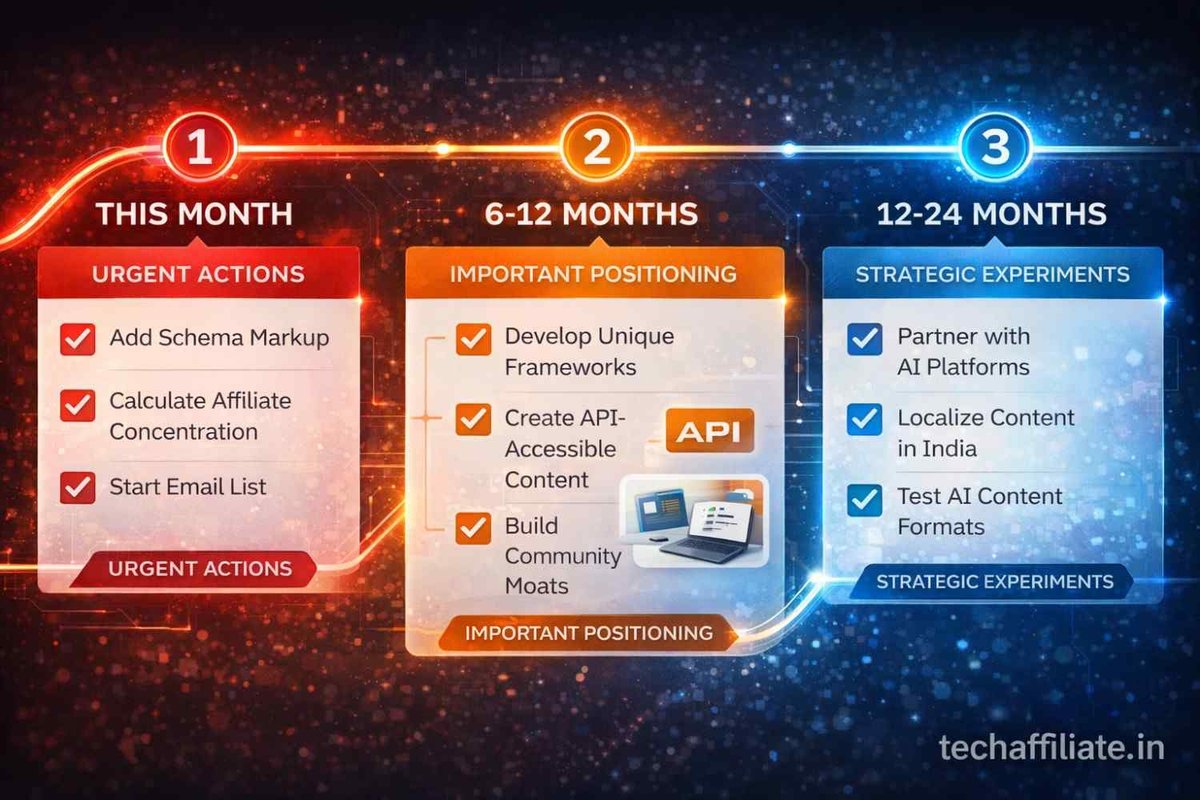
Immediate Actions (This Month)
1. Implement structured data everywhere.
Add Schema.org markup to every product review. Use Google's Structured Data Testing Tool to verify. Include Product, Review, and Aggregate Rating schemas with SKU, price, availability, ratings.
2. Audit your revenue concentration.
If above 60% depends on affiliate links, diversify immediately: sponsored content, community memberships, digital products, consulting.
3. Contact top merchants directly.
Propose partnerships independent of click-through attribution. Bring audience engagement data, purchase influence surveys. Negotiate flat fees instead of CPA.
Mid-Term Positioning (6-12 Months)
4. Build defensible expertise assets.
Original product testing, comparison frameworks with unique criteria, product databases, long-term usage tracking. Focus on depth over breadth.
5. Establish API-accessible content.
Create JSON endpoints, explore data licensing with AI platforms, build queryable tools, develop expertise that becomes training data.
6. Develop community moats.
Email lists, Discord/WhatsApp communities, subscription products, live events direct relationships outside content discovery.
7. Invest in original research.
Conduct surveys, create benchmarks, develop testing methodologies generating unique insights.
Strategic Experiments (12-24 Months)
8. Explore AI platform partnerships early.
Position as someone who understands both the product category and how to serve AI systems.
9. Build authority in regional languages (India-specific).
Create authoritative guides in Hindi, Tamil, Bengali, Marathi before AI language capabilities catch up.
10. Test AI-native content formats.
Conversational content for voice queries, structured datasets for AI consumption, API documentation, video demonstrations.
What You Should Do This Week
For Affiliates:
- Add Schema.org markup to your top 10 articles
- Calculate your affiliate revenue concentration
- Email one brand to discuss direct partnerships
- Start building an email list
For Developers:
- Study the UCP specification
- Build tools helping merchants expose structured product data
- Experiment with AI agent integrations
For E-commerce Owners:
- Audit product data quality (is it machine-readable?)
- Ensure real-time inventory accuracy
- Improve fulfillment reliability
The Future Is Gradual, Then Sudden
AI will quietly handle routine purchases while humans retain control over high-trust, high-value decisions. But once consumers trust AI with ₹500 purchases, ₹5,000 purchases follow.
The infrastructure is being built now by companies controlling trillions in market cap. The question is whether your role in the transaction still exists when AI-driven commerce becomes the default.
About TechAffiliate.in : We cover technology, affiliate marketing, and developer trends with actionable insights for Indian tech professionals.
Affiliate Disclosure
TechAffiliate may earn a commission if you purchase through our links. This helps support our work but does not influence our reviews. We provide our honest assessments of products. See my testing methodology →
Related Articles
 AI & Machine Learning
Jan 14, 2026 • 11 min read
The Intelligence You've Stopped Noticing
Ambient AI doesn't wait for your commands it watches, learns, and acts in the background. The systems you've stopped noticing are making thousands of decisions on your behalf. What happens when convenience becomes drift?
 AI & Machine Learning
Dec 11, 2025 • 10 min read
What is Agentic AI? The Technology Replacing Apps in 2026 - Complete India Guide
Agentic AI isn't ChatGPT 2.0... it's something far more powerful. Discover how AI agents are replacing traditional apps in 2026, and why 200,000+ Indian IT professionals are already using this technology at TCS, Infosys, Wipro, and Cognizant. Complete guide for students and professionals.
 Cybersecurity
Jan 7, 2026 • 17 min read
Why Your Encrypted Data Is Already at Risk (And What's Being Done About It)
Hackers are stealing encrypted data NOW to decrypt with quantum computers in the 2030s. Learn how Post-Quantum Cryptography protects your data today.
 AI & Machine Learning
Jan 4, 2026 • 19 min read
Zero Code? Indians Making ₹80K/Month With AI "Vibe Coding"
1.8 million developers worldwide pay for AI to write code. Indians earning ₹80K/month with vibe coding zero traditional programming needed. Complete 2026 guide inside.
Comments (0)
Leave a Comment
No comments yet
Be the first to share your thoughts!